Taylor Krause · 10 September 2026
Circular Referral Mechanisms and Their Application in Scaling Digital Service Ventures Beyond Traditional Marketing Channels
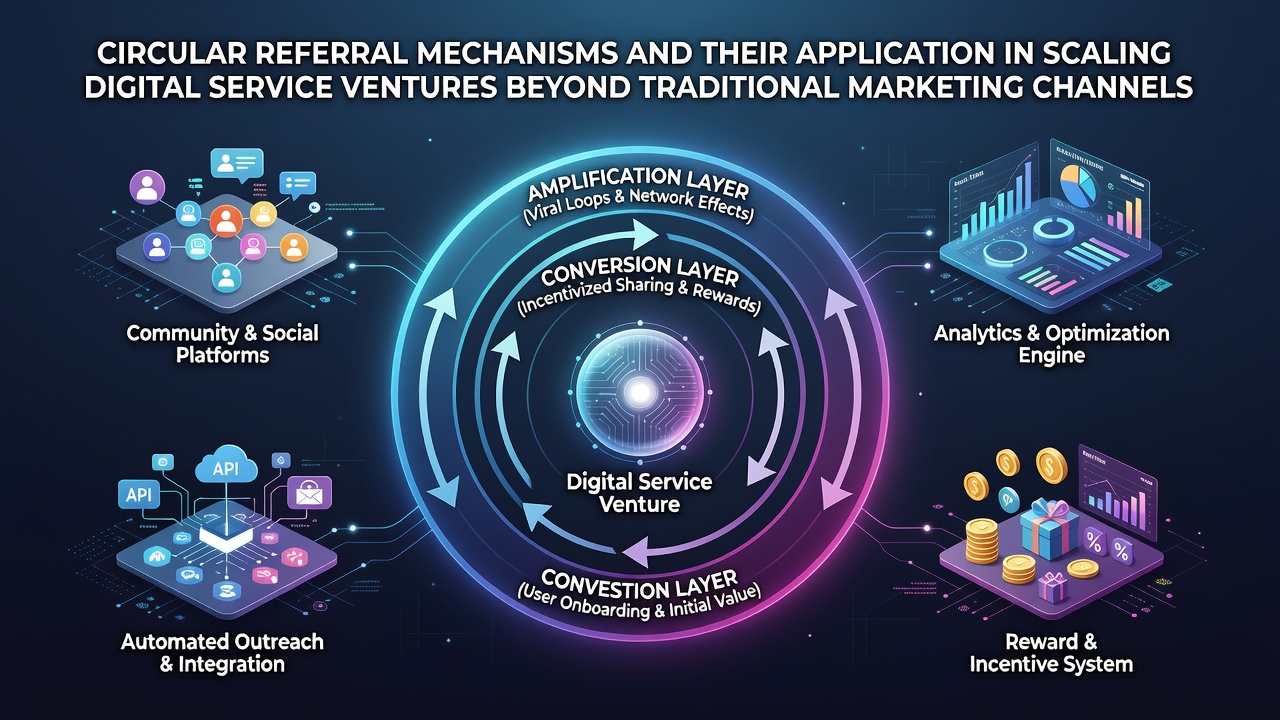
Digital service ventures have adopted circular referral mechanisms to create self-reinforcing growth cycles that extend user acquisition past paid advertising and search engine optimization. These systems operate through structured loops where existing users invite new participants, those newcomers complete actions that generate rewards, and the process repeats without external marketing inputs. Data from industry reports indicate that such mechanisms contribute measurable portions of user growth in sectors including software-as-a-service platforms, fintech applications, and collaborative tools.
Defining Circular Referral Mechanisms
Circular referral mechanisms function as closed-loop processes in which each participant both receives and extends invitations, forming continuous chains rather than one-way linear referrals. Researchers at academic institutions have documented how these structures rely on incentive alignment, where rewards such as credits, premium features, or monetary payouts activate only after the referred user reaches specific milestones. The cycle sustains itself because successful referrals increase the pool of potential inviters, reducing dependence on one-time campaigns.
Observers note that implementation typically involves tracking software that assigns unique referral codes, monitors conversion events, and distributes benefits automatically. This automation allows scaling without proportional increases in support staff or advertising budgets. Figures from multiple venture analyses reveal that companies embedding these loops early in product development achieve higher retention rates compared with those relying solely on outbound channels.
Historical Development and Adoption Patterns
Early examples appeared in consumer internet services during the late 2000s, when companies integrated shareable links into email and social features. By the mid-2010s, more sophisticated versions emerged in enterprise software, where account-based referrals replaced simple link sharing. Government statistical agencies in Canada and Australia have tracked rising use of referral programs within digital economy sectors, noting their contribution to service exports and small business formation.
September 2026 projections from the OECD digital economy outlook anticipate further integration of circular mechanisms into AI-assisted onboarding flows, where algorithms predict optimal referral timing and personalize incentive offers. These developments build on existing infrastructure rather than replacing it, allowing ventures to layer referral logic onto core product usage data.
Technical Components and Operational Flow
The operational sequence begins with user registration that includes an optional referral field. Once activated, the system records the connection and triggers conditional rewards after predefined behaviors occur, such as completing a transaction or maintaining an account for thirty days. Backend databases log each step, enabling analytics teams to calculate viral coefficients that measure how many new users each existing user generates on average.
Integration with customer relationship management platforms provides visibility into which referral sources produce the highest lifetime value. Companies that publish transparency reports on these metrics allow external analysts to compare performance across regions. European Union digital single market documentation highlights how data portability requirements influence the design of referral tracking to ensure compliance with privacy regulations.
Applications in Digital Service Scaling
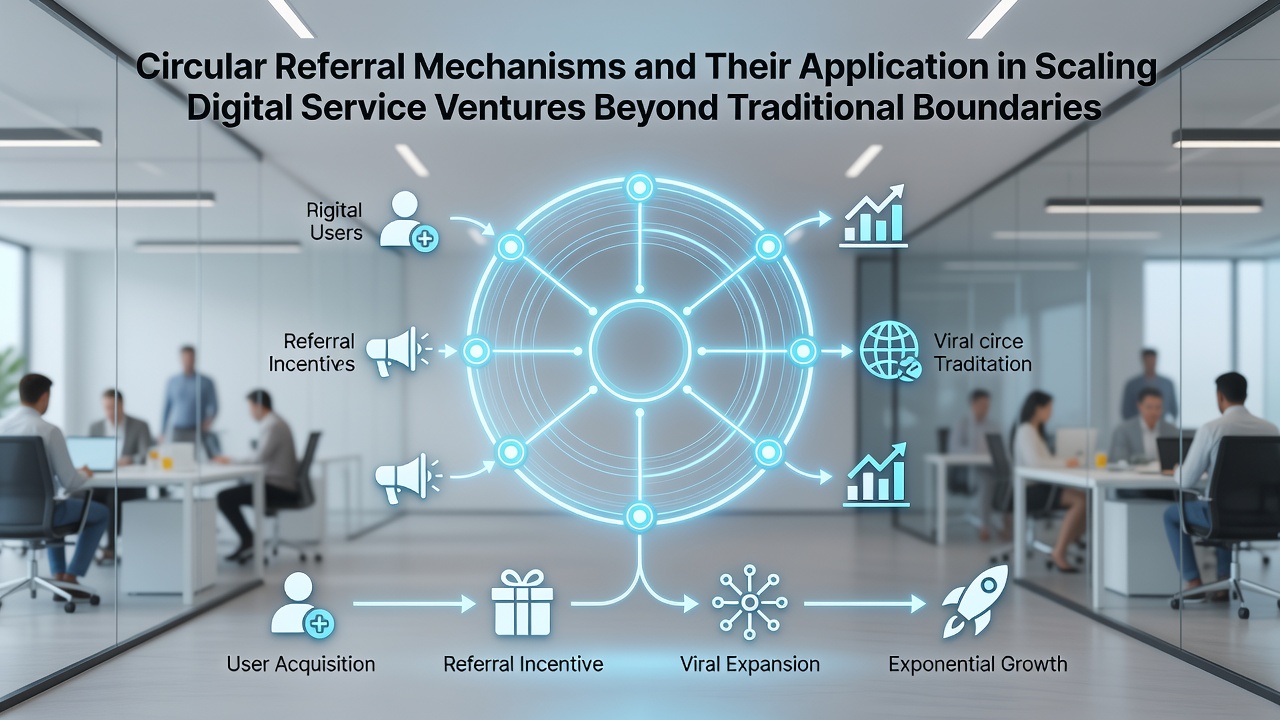
Software companies have applied circular referrals to expand beyond initial geographic markets without establishing local sales teams. A documented case involved a project management platform that offered storage upgrades for each successful team invitation, resulting in organic expansion across multiple continents. Similar patterns appear in educational technology services where student referrals unlock course materials for both parties.
Payment and banking applications use circular structures to onboard merchants who then refer other businesses within supply chains. Research papers from university business schools demonstrate that these chains produce compounding effects when combined with usage-based pricing, because increased activity generates more referral opportunities. Trade association reports from the Asia-Pacific region document parallel growth in logistics software that employs referral credits to connect shippers and carriers.
Performance Metrics and Comparative Data
Quantitative evaluations measure success through metrics including referral conversion rate, cycle time from invitation to activation, and net promoter contribution to overall user acquisition. A study conducted by an Australian research institute compared ventures using circular referrals against those dependent on display advertising and found lower customer acquisition costs in the referral group over multi-year periods. US Small Business Administration resources on digital tools note that referral programs appear frequently in scaling strategies for startups seeking to conserve capital.
Industry organizations tracking software adoption have compiled datasets showing seasonal variations, with higher referral activity during product launch periods or feature updates. These patterns allow planners to forecast resource needs for reward fulfillment and support staffing.
Regulatory and Compliance Considerations
Authorities in multiple jurisdictions require clear disclosure of referral terms to prevent misleading claims. Documentation from the Australian Competition and Consumer Commission outlines expectations for transparent communication of incentive conditions. Similar guidance appears in Canadian regulatory materials on digital marketplace practices, emphasizing accurate representation of reward values and eligibility rules.
Compliance teams integrate these requirements into the software itself by displaying terms at the point of invitation and maintaining audit logs of communications. This approach reduces legal exposure while preserving the self-sustaining nature of the referral cycle.
Conclusion
Circular referral mechanisms provide documented pathways for digital service ventures to expand user bases through internal network effects. Available data from government agencies, academic studies, and trade reports illustrate consistent application across sectors and regions. Continued evolution through integration with emerging technologies positions these systems as ongoing components of growth strategies that operate independently from traditional marketing expenditures.